Türkiye’s Return to the Arab Security Architecture: The Significance of the Mecca Declaration

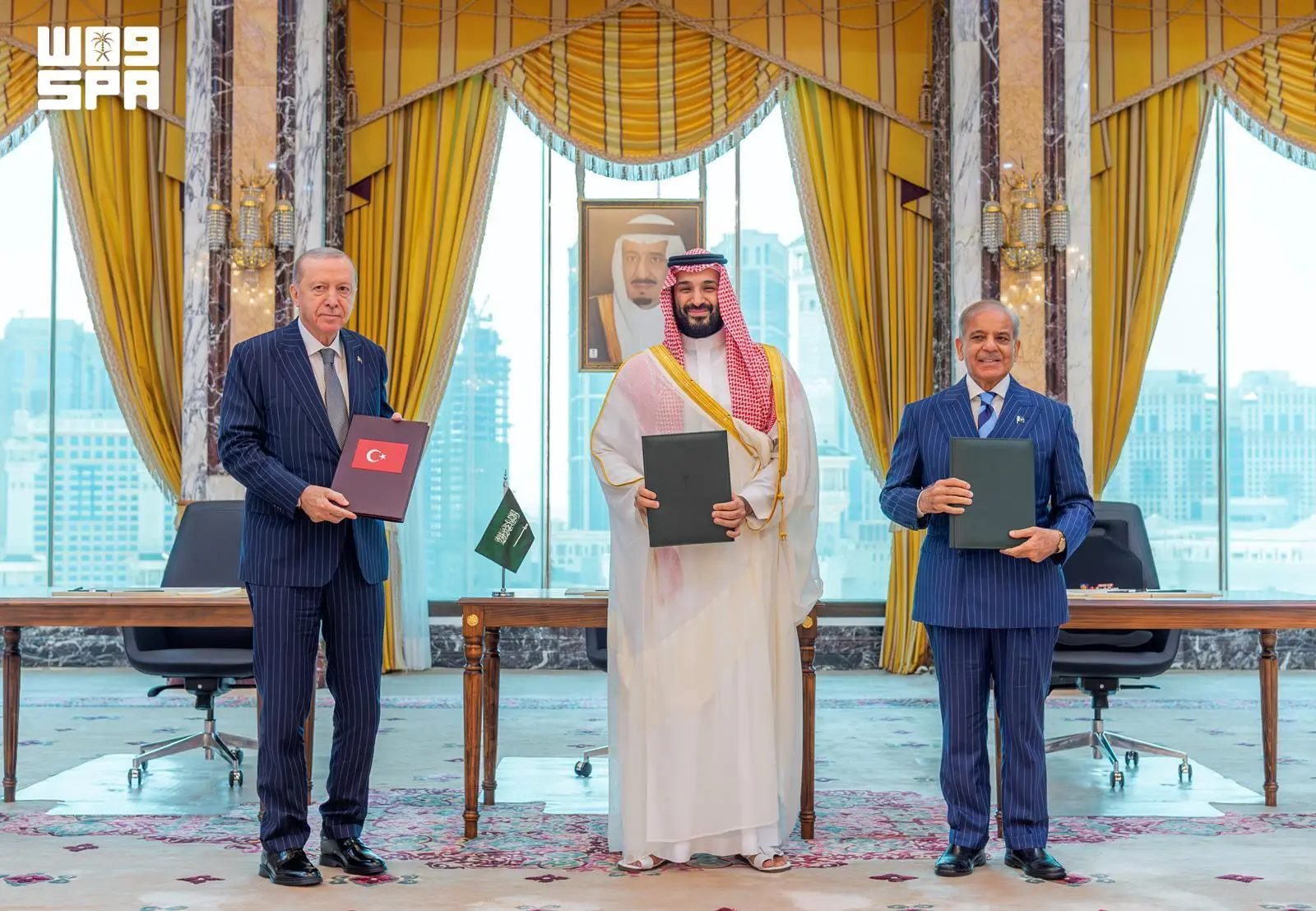
Following its defeat in the First World War, the Ottoman Empire was compelled to withdraw from the Arab heartland, bringing an end to centuries of its presence in the region. The subsequent political transformation fundamentally altered Türkiye’s relationship with the Arab world. A century later, Ankara appears to be gradually reasserting its presence in the region and seeking to reconnect with a historical and cultural space in which it once played a central role. The Arab Revolt of the Hejaz, led by Sharif Hussein against the Ottoman Empire, contributed to the eventual dissolution of the empire and emergence of a new regional order. In this historical context, the Mecca Declaration represents a potentially significant development in Türkiye’s evolving foreign-policy engagement with the Arab world. The Declaration is likely to be viewed, above all, as a mechanism for strengthening and protecting Saudi Arabia’s strategic interests. Its significance, however, extends beyond the Saudi context. As the declaration clearly states that collective deterrence against any act of aggression, and any armed attack against any three countries (Saudi Arabia, Turkiye and Pakistan) will be regarded as an attack on all of them, it resembles NATO’s Article 5.
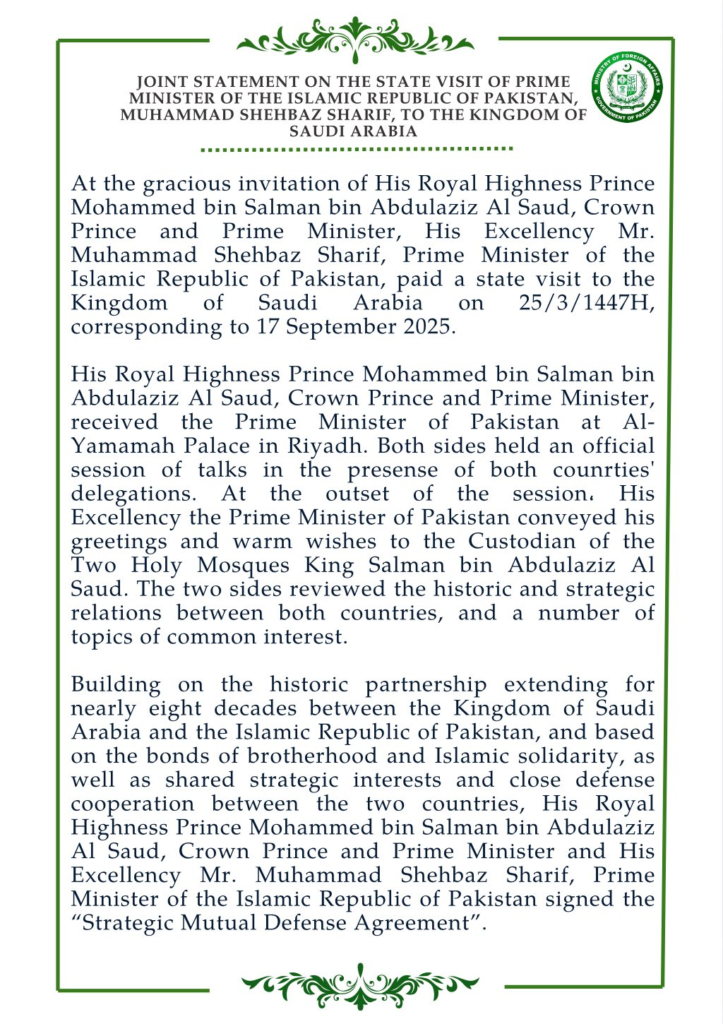
The intensification of tensions between the United States and Israel on the one hand and Iran on the other, culminating in a full-scale military confrontation, has generated significant military, political, and economic repercussions across the Arab region. Iran’s retaliatory actions have further heightened regional insecurity, reinforcing the need for stronger regional security mechanisms and greater coordination among Arab states. Israel’s perceived hegemonic and expansionist approach to regional politics has already produced significant ripple effects across the Middle East/West Asia, despite the signing of the Abraham Accords by several prominent Arab states with U.S. backing. Rather than eliminating underlying security dilemmas, the evolving regional environment has exposed the continuing fragility of the existing security architecture.
At the same time, Iran’s retaliatory response to what it considers unjust military aggression has created additional vulnerabilities for Arab states. The closure of the Strait of Hormuz has particularly significant economic implications, given the waterway’s centrality to global energy supplies and the economies of Gulf states. Moreover, the threat to the Bab el-Mandeb Strait through Iran-aligned forces in Yemen, particularly Ansar Allah (the Houthis), further compounds the region’s strategic and economic vulnerabilities. The convergence of these developments has transformed the security environment of the Arab world. Regional states are increasingly confronted with the challenge of protecting their territorial security, economic interests, maritime trade routes, and energy infrastructure amid intensifying great-power and regional rivalries. This environment strengthens the rationale for developing more coordinated and autonomous regional security mechanisms rather than relying exclusively on external security guarantees.
For Türkiye, this emerging security environment presents both a challenge and an opportunity. Ankara has been seeking to expand its strategic footprint in the Arab world, and its post-Assad engagement in Syria has already provided an important opening for renewed regional influence. The Mecca Declaration could represent another step in this trajectory by positioning Türkiye within the evolving Arab security architecture. Türkiye’s participation may also contribute to a gradual transformation of regional security dynamics. If the initiative gains wider acceptance, additional Arab states may seek to associate themselves with the emerging security framework. Such an expansion could strengthen collective regional security coordination while simultaneously increasing Türkiye’s strategic relevance in the Middle East/West Asia. The recently announced revival of the Hejaz Railway project is a historic re-connection between Türkiye and Saudi Arabia. Once imagined as one of the Ottoman Caliphate’s most ambitious infrastructure projects, the railway was a vital link between the Ottoman heartland and the Arabian Peninsula. Its proposed revival is therefore significant not only regionally in terms of transport and economic connectivity, but also as a symbolic attempt to bring the two countries together through a shared historical and cultural legacy. President Recep Tayyip Erdoğan stated that ‘this agreement, based on collective deterrence, will contribute to advancing our security and defense cooperation, developing joint projects in the defense industry, and combating terrorism. The agreement, which also reaffirms the right of defense as defined in Article 51 of the UN Charter, targets no country and is open to participation of all brotherly countries that aim for the peace, prosperity, and stability of our region. In line with its vision of regional ownership, Türkiye will resolutely continue its principled stance toward resolving conflicts and crises through dialogue and diplomacy based on respect for international law.’
The broader significance of the Mecca Declaration, therefore, lies not merely in the establishment of another security arrangement. It could mark an important stage in Türkiye’s gradual return to the Arab strategic space after a century of relative institutional distance. Its implications may extend beyond, influencing the wider geopolitical and security environment (already proven in the Azerbaijan-Armenian conflict where Turks played a pivotal role in favour of Baku in liberating the contested territories of Nagorno-Karabakh), strategic and military role in Somalia, Sudan and Libya. Türkiye is presenting itself as a reliable security architecture with its modern armed industry not only for its neighbouring countries but for Europe too. Italy formed joint industrial structures (such as LBA Systems between Baykar and Leonardo) to co-produce and maintain unmanned systems for European markets, but countries like Malaysia and Indonesia of East Asia are part of Türkiye’s security dynamics.
The views and opinions expressed in this article are those of the author(s) and do not necessarily reflect the official policy or position of the International Dialogue & Diplomacy Foundation (IDDF).