The Gulf Is Learning to Live Without a Single Protector: Türkiye as a Stakeholder

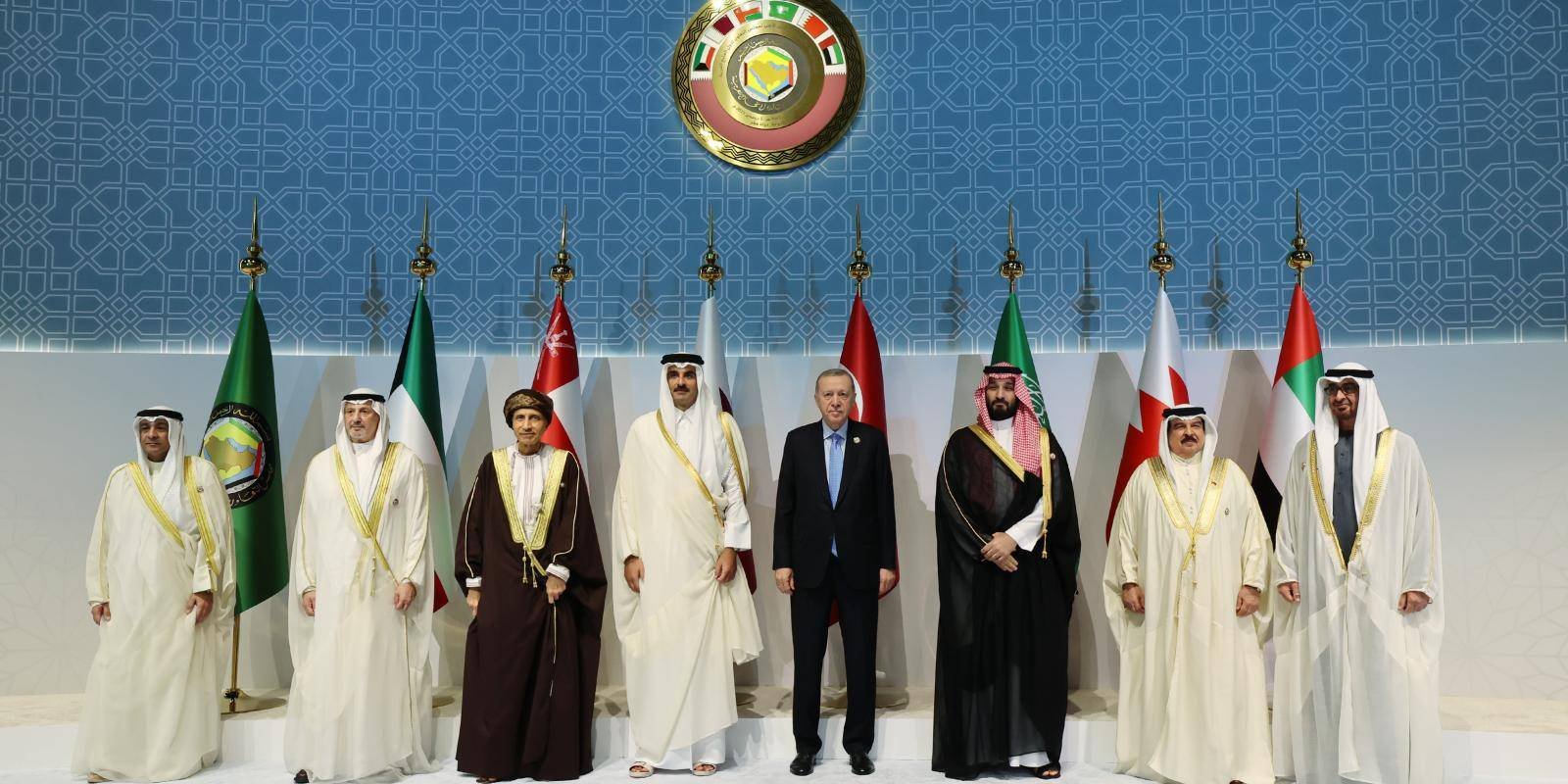
The security of the Gulf for the past half century, rested on a simple bargain: the United States provided the shield, and the Gulf countries provided the bases, the oil, and the deference. That bargain is still there, but it is no longer considered enough, and the current Iran-Israel war has made the point in the bluntest way possible. The missiles and drones which came from Iran, struck the Gulf infrastructure and American installations sitting on the Gulf soil.1 The policymakers from Saudi Arabia, UAE, and Qatar had quietly understood that proximity to a superpower’s assurance is not the same as protection from a regional war. The entry of Türkiye, in this unsettled moment, into Gulf security deserves closer attention, not as a curiosity of bilateral diplomacy, but as a structural characteristic of the security order that is slowly and quietly becoming multipolar.
A Relationship That Outgrew Its Origins
The engagement of the Türkiye with the Gulf did not start as a security story, but it started as a commercial one. The skylines of the Gulf cities were built by the Turkish construction companies, Gulf sovereign wealth funds bought into Turkish banks and real estate, and it was in 2008 that Türkiye became the first country that was designated as a formal “strategic partner” of the Gulf cooperation council.2 For most of the first decade of the 21st century, this was a relationship about markets, not missiles. What shifted the equation was a series of shocks that the GCC countries received not as abstractions but as direct threats to the regime’s security: the 2003 Iraq invasion, the Arab uprisings, the 2015 Iran Nuclear deal, the 2017 Qatar blockade, and now the Iran-Israel war. Each event chipped away at the assumption that American backing was automatically comprehensive, consistent, or fast. During the Gulf crisis of 2017, USA’s own signals were contradictory, initially the White House sided rhetorically with the blockading countries even as the Pentagon quietly endorsed the strategic importance of Al Udeid Air Base.3 That kind of dissonance, however brief, is exactly what pushes small and mid-sized countries towards diversification of their security.
What “Stakeholder” Actually means
A security stakeholder is embedded in the architecture that actually manages the security and threats, it trains foreign militaries, shares intelligence, sells and services weapons systems, and shows up during crises. Türkiye, by that measure, has crossed a threshold. Roughly more than two dozen bilateral security agreements had been concluded between Türkiye and Gulf countries, covering everything from cyber cooperation to joint military education.4 Türkiye has a permanent military base in Qatar, its first in the Gulf region. In the decade between 2014 and 2023, the Gulf states almost absorbed more than a third of all the defence exports of Türkiye, a figure that shows genuine strategic reliance rather than one-off arms deals. The post 2021 era, after the Al-Ula reconciliation, which helped in reconciling ties between Riyadh and Abu Dhabi with Türkiye, after the years of post-Arab spring rivalry, removed the last major political hindrance to institutionalizing this cooperation within the GCC rather than just with Qatar.
The Iran-Israel war as a catalyst, not a cause
To read the recent conflict as the cause of this shift would be a mistake, it is better understood as a catalyst. The current war did two things at a time. It reminded the GCC countries that the security umbrella of the U.S. remains indispensable, no power, regional or middle, can substitute for the U.S. air defence, naval presence, or deterrent capacity against Iran. But it also reminded these countries that indispensable is not the same as sufficient or enough. Iranian Missile and drone salvos still landed in the Gulf. Military and civilian infrastructure still got damaged. And the monarchies of the Gulf still faced an agonizing set of choices, pressing U.S. for restraint, leaning further into the Washington-led escalation, or trying to manage the fallout independently, that no external guarantee could resolve for them. That gap between “indispensable” and “sufficient” is precisely the gap Türkiye has been filling. Its appeal lies less in pretense of replacing the U.S. power and more in offering something Washington often cannot, rapidly deployable, relatively cheap, and combat tested capabilities- drones, air defense systems, and military training, delivered unconditionally as U.S. arms sales sometimes accompany political conditionality. During the recent Iran-Israel confrontation the defense ministry of Kuwait signed a new cooperation agreement with the defense industry of Türkiye,5 the other Gulf countries also moved in parallel to deepen the procurement ties. These gestures are not just symbolic. They are a hedging behavior by these states that came to the conclusion, rationally, that concentration risk applies to security guarantees just as it applies to the financial portfolios.
Not competitive, but Complementary
None of this should be perceived as the downfall of the primacy of America in the Gulf region, and Türkiye itself has been very careful to not frame it that way. The officials of the Türkiye consistently describe their role in terms of contributing to the stability of the region rather than displacing the present arrangements. It is again a rhetorical choice that is also a strategic one, since an open challenge to the U.S. position would estrange the very Gulf states that Türkiye is courting. What is emerging rather is a layered security order, U.S. umbrella that remains the ultimate backstop, with regional powers, Türkiye being foremost among them, providing supplementary capacity that the umbrella cannot, or will not, always provide fast enough.
The policy implication
For the United States, the lesson is not that Türkiye is a rival to be countered but that Gulf diversification is a passing hedge. Treating the increasing footprint of Türkiye’s encroachment risks pushing the GCC states towards framing their choices as zero-sum when they are not. For the policymakers of the Gulf, the logic already looks settled, more partners, more redundancy, more room to maneuver the next time a missile or drone does not respect the difference between the territory of an ally and a battlefield. And as far as Türkiye is concerned, the challenge going forward is less about winning the contracts, than about proving, in the crisis next time, that the status of stakeholder translates into reliable delivery when it matters most.
The views and opinions expressed in this article are those of the author(s) and do not necessarily reflect the official policy or position of the International Dialogue & Diplomacy Foundation (IDDF).