India–Oman Relations — Strategic, Economic and People-to-People Dimensions

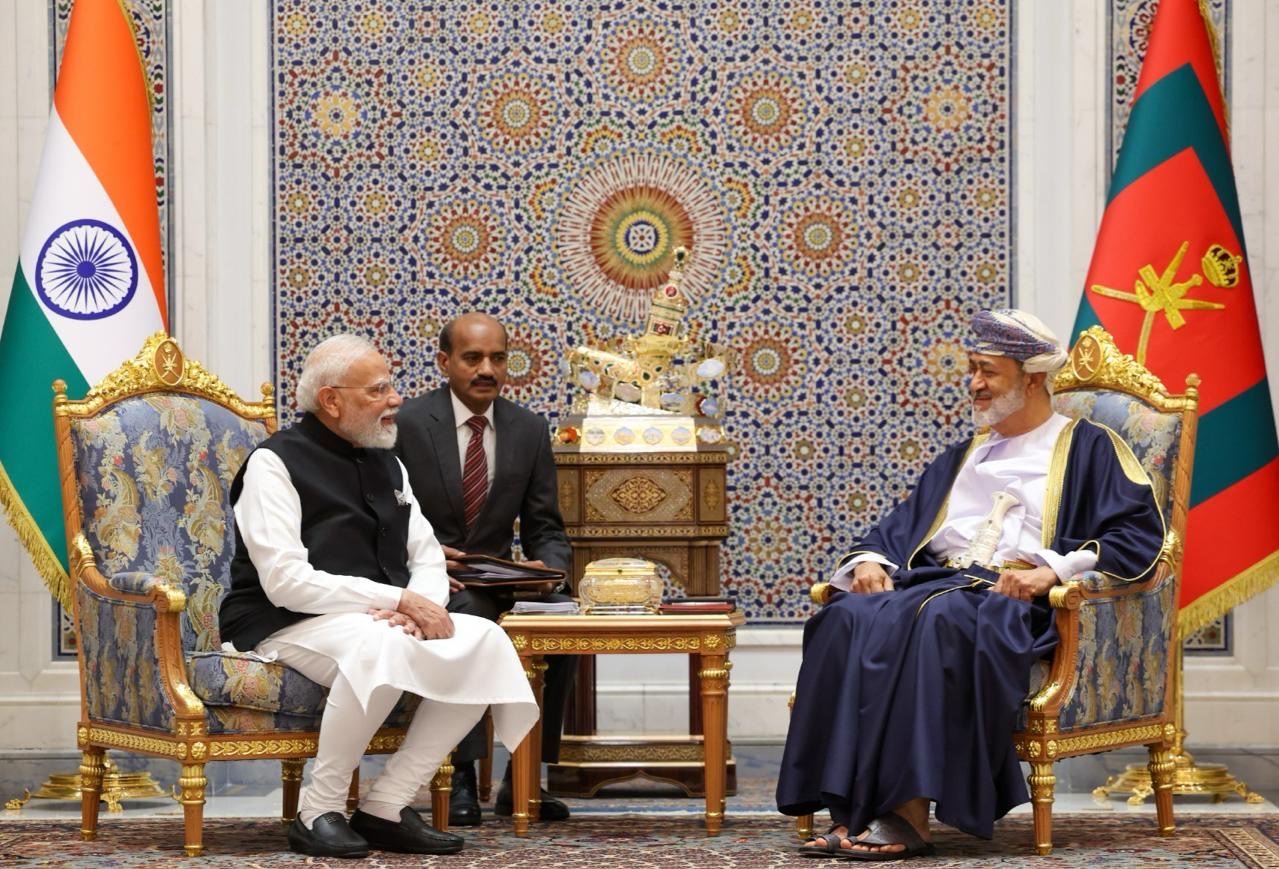
Despite their distant locations on the Asian continent, India and Oman have maintained a close relationship for centuries. Separated by a distance of 736 nautical miles (1,363 kilometres) via the Indian Ocean, both nations share a long history of trade and cultural exchange.
Recently, the Prime Minister of India visited Oman on 17–18 December 2025, during which he was conferred the Order of Oman (First Class). The visit coincided with the 70th anniversary of the establishment of diplomatic relations between India and Oman. It witnessed the signing of the Comprehensive Economic Partnership Agreement (CEPA), several key Memoranda of Understanding, and the adoption of a Joint Vision on Maritime Cooperation, thereby strengthening economic, strategic, and people-to-people ties between the two countries.
In this context, Prayant Praved, Research Intern at the IDDF Research Foundation, spoke with Prof. Aftab Kamal Pasha and Dr. Omair Anas on the strategic, economic, and people-to-people dimensions of India–Oman relations.
Edited excerpt from opinions shared by Prof. Aftab Kamal Pasha and Dr. Omair Anas on India–Oman relations:
Prayant Praved: The Indian diaspora has historically played an important role in India–Oman ties. In the current phase of bilateral engagement, how can we further strengthen people-to-people relations?
Prof. Pasha: Among the diaspora, the Gujrati, Bhatias, and Kutchhis, mostly non-Muslims, have served the Al Busaidi dynasty, who currently rule Oman, and have welcomed Indians, who are They are employed in various areas, but their numbers are far fewer than those in the United Arab Emirates and the Kingdom of Saudi Arabia.
Prayant Praved: What should be the key priorities for India–Oman relations over the next decade, especially in a rapidly changing regional and global order?
Prof. Pasha: Due to Iran, Yemen and growing hotspots in [the] Gulf and broader Red Sea region, and Pakistan’s hostile postures, defence, security and maritime cooperation are vital for our trade, energy and national security. We have promised a lot in all three areas but delivered very little. Oman should be our first line of defence in the west and a crucial anchor for energy & anti-piracy operations.
Dr. Omair Anas: India-Oman CEPA is an important shift in India’s otherwise reluctant approach towards free trade agreements. However, with a growing export economy over the past decade, the US tariff war has created a favourable condition for India to look beyond big markets. The India-Oman CEPA is even unique, as it covers services.
Prayant Praved: What policy recommendations would you offer to ensure that the momentum generated by Prime Minister Modi’s visit translates into sustained, long-term cooperation?
Prof Pasha: India should offer massive help in the industrialisation of Oman, starting from SMEs, setting up engineering, medical institutes, IT sectors, farming, dairy, sericulture and horticulture universities, and also veterinary institutes and animal husbandry areas. Provide over one lakh ICCR scholarships to Omani students to come study in India and acquire skills. We must make a good model of making Oman a self-reliant nation. We showcase what we are capable [of].
Dr. Omair: CEPA will simplify Indian companies’ exports to third countries via Oman, to international markets where India has yet to have gifted trade agreements. This will also diversify India’s export market beyond the United Arab Emirates, the biggest third-country export destination for Indian companies. With CEPA in place, India has also strengthened its standing in the Middle East in a bilateral format, without getting distracted by intra-Arab competition and rivalries. This friendship will make a unique relation in India’s Middle East relations, as it combines a strong diaspora, strong personal connections of Oman’s royal family, and Oman’s moderate Islamic identity in the Islamic world. However, this scenario also brings a lot of sensitivities that India would have to display about cultural relations and particularly about Islam’s sacred personalities and books. A few years ago, the remarks of an Indian politician against Prophet Mohammad had sparked a major row, and Oman’s grand mufti had to issue a statement. The Indian government had rushed to control the damage.
*Prof. Aftab Kamal Pasha is the Director of the IDDF Research Foundation, New Delhi. A leading West Asia geopolitical expert, he has previously served as Associate Dean, Chairman, and Director at the School of International Studies (SIS), Jawaharlal Nehru University (JNU), New Delhi. He has also served as Director of the Maulana Azad Centre for Indian Culture, Cairo, Egypt.
*Dr. Omair Anas is the Director (Research) of the IDDF Research Foundation, New Delhi. He is an Assistant Professor in the Department of International Relations at Ankara Yıldırım Beyazıt University, Turkey, and has previously served as a Research Fellow at the Indian Council of World Affairs (ICWA), New Delhi.