India’s Multi-Alignment Policy and What President Putin’s Visit Reveals About it

By – Neha
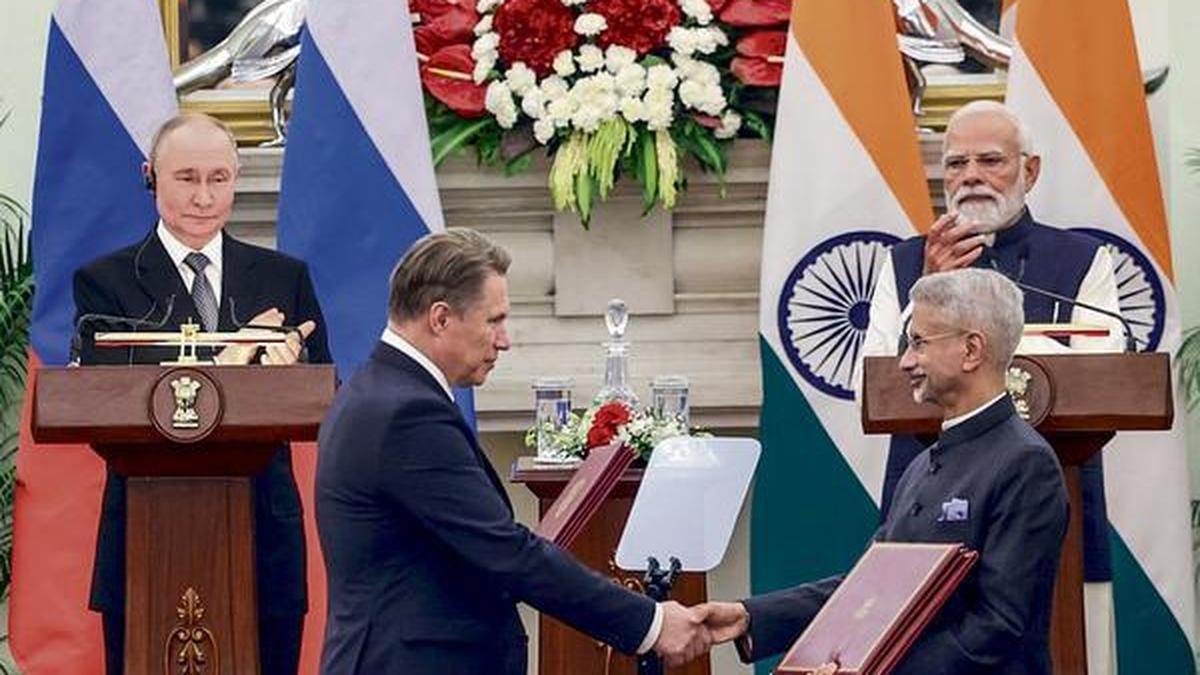
President Putin’s India visit for the 23rd India-Russia Annual Summit has been significant in many ways, but the most important aspect is how clearly it revealed India’s strategic posture in intense global politics. India has long played a balancing act among world powers, pursuing what it calls “strategic autonomy.” Today, analysts describe the situation as multi-alignment—deepening ties with the United States and its allies while also preserving historic relations with Russia. This dual strategy is not hypocrisy; it is strategic autonomy in action. In other words, New Delhi maintains flexibility in its options.
Western leaders were reminded of this when India sharply reacted to comments made before the summit about its Russia policy, warning that it was “not an acceptable diplomatic practice to give advice on India’s relations with a third country.” Rather than joining any bloc, India pursued its course. As one observer put it, India is “walking a diplomatic tightrope” – maintaining its historical bond with Moscow and deepening its partnership with the US and Europe.
Prime Minister Modi and President Putin have repeatedly called the India-Russia partnership “special and privileged,” and the 2025 summit underscores why. India still depends on Russia for key defense and energy needs. Against external pressure, Putin vowed “uninterrupted shipments of Russian oil and fuels to India.” Modi reminded the media that energy security is a “strong, important pillar of the India-Russia partnership.” Both parties struck deals on everything from nuclear reactors to critical minerals and also finalized an economic cooperation program, which aims to double trade to $100 billion a year by 2030. They even discussed settling more business in rupees and rubles (instead of dollars) to make trade less vulnerable to Western financial sanctions. At the same time, India is conscious of Russia’s growing closeness with China and is steadily diversifying its defense partnerships. Though Russia remains India’s largest arms supplier, New Delhi is reorienting from plain exports to joint development of advanced weapons.
Parallel to this, India is moving ahead with the West. In October 2025, India signed a 10-year defence framework with the US to enhance coordination, information sharing, and technological cooperation between the two nations. India is also an active member of security forums like the Quad (with the US, Japan, and Australia) and supports Western-led initiatives such as AUKUS (Australia, the UK, and the US). Apart from this, the New Strategic EU-India Agenda released in October 2025 to elevate the partnership to a higher level, positioning India as a central pillar in Europe’s vision for a multipolar, rules-based international order. But India has made clear that any partnership must serve its needs. In fact, analysts note that India’s trade with the EU at $138 billion is about the same as with the entire ASEAN region—reflecting that India is diversifying partners and reducing dependence on any single region.
Since the Ukraine War, India has consistently refused to condemn Russia outright. In the UN and media, they have walked on a fine line—calling for peace but not taking a stand against Moscow or cutting defense ties. Modi often reminds people that the present is not an era of war and urges dialogue over conflict. India also defended its trade with Russia, including the purchase of crude oil, after most of the West sanctioned it. Dr. S. Jaishankar stated that the West needs to grow out of the mindset that “Europe’s problems are the world’s problems, but the world’s problems are not Europe’s problems.”
What does all this reveal about India’s global strategy? Simply put, India responds to its own priorities, avoiding dependence on any one power. Putin’s visit showed India keeps all channels open regardless of external pressure. Doing deals that advance its goals: securing affordable energy, building its military and economy, and balancing its giant neighbors like China. As one commentator put it, this summit was a “master class in multi-alignment”—proof that India can keep old friendships alive while embracing new ones.
Neha, is a Research Intern at IDDF Research Foundation