Event Report: “The Future of Hamas and the Palestinian Struggle After the Ceasefire”

Date: 22 November 2025
Platform: Zoom
Organised by: International Dialogue and Diplomacy Foundation (IDDF)
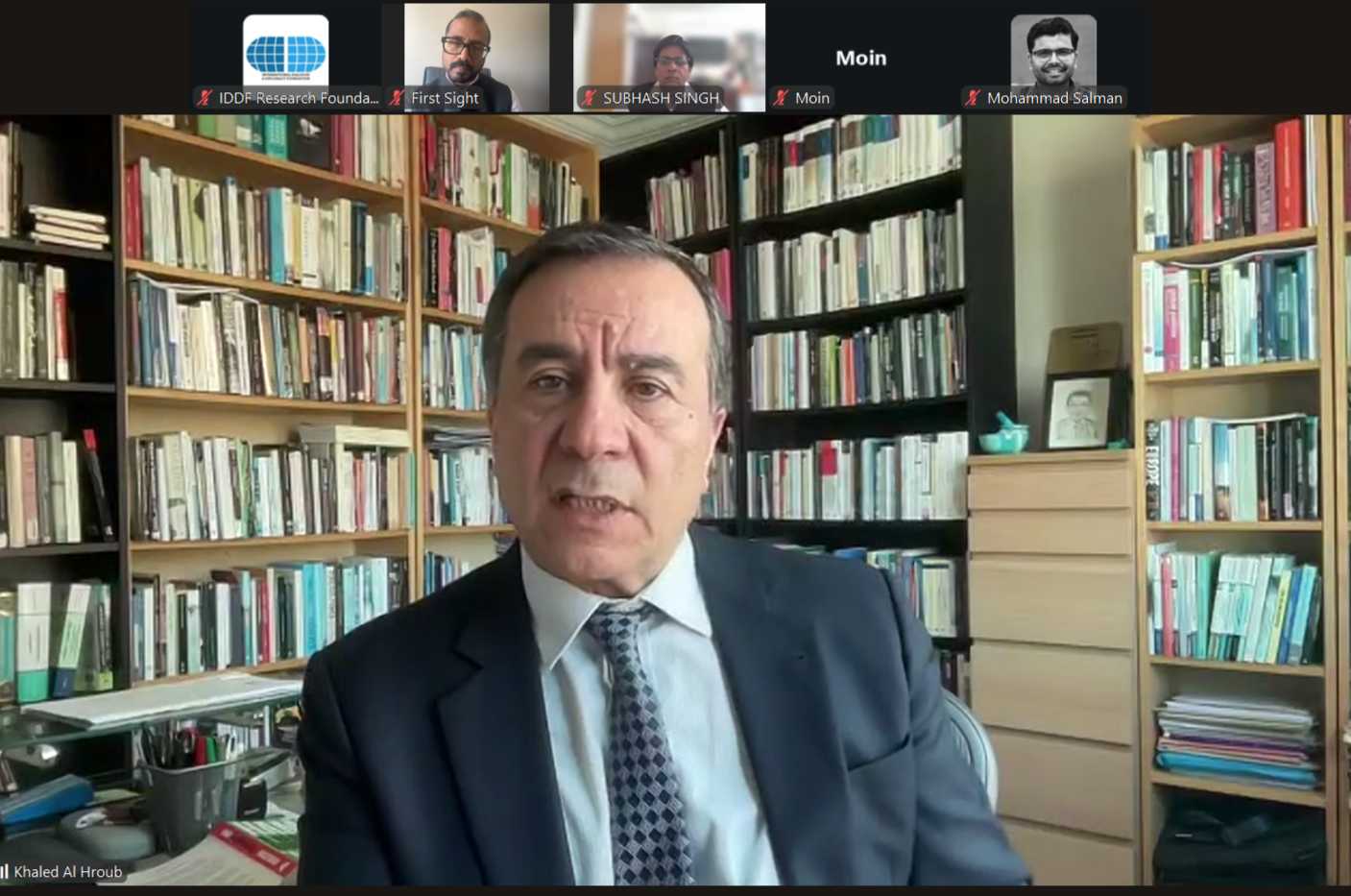
The International Dialogue and Diplomacy Foundation (IDDF) organised a timely and insightful online lecture titled “The Future of Hamas and the Palestinian Struggle After the Ceasefire” on Saturday, 22 November 2025. The event examined the evolving political, historical, and humanitarian dimensions of the Palestinian question following the recent ceasefire in Gaza.
The session featured Prof. Khaled Al-Hroub, a distinguished Palestinian scholar from Northwestern University in Qatar and author of the influential book Hamas: A Beginner’s Guide. The programme was chaired by Dr. Omair Anas, Director (Research), IDDF Research Foundation, while Dr. Subhash Singh, Assistant Professor at NCERT, joined as the Discussant, offering analytical reflections that enriched the conversation.
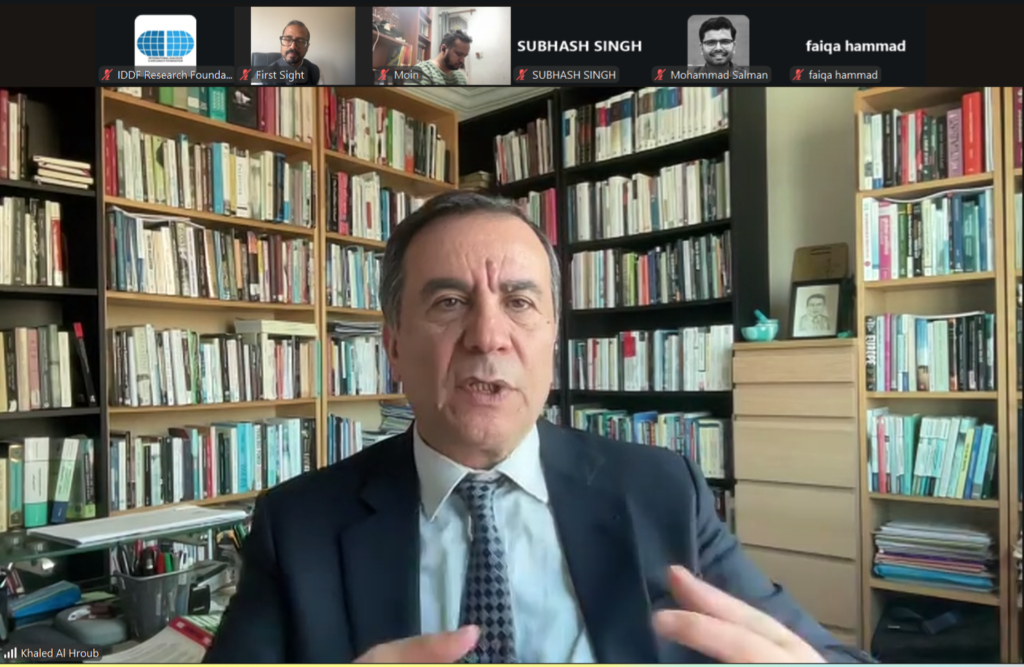
Prof. Al-Hroub’s talk examined the Palestinian struggle from its historical roots to its current state and possible futures. He contended that Palestinian resistance constitutes a legitimate reaction to occupation, whereas Israel, the U.S., and Western institutions have historically securitized this resistance to depoliticize Palestinian assertions. By looking back at important events like the Nakba, Hamas’s victory in 2006, and the split between Hamas and Fatah, he showed how the two groups use different methods of diplomacy and resistance. He said that today’s world is marked by Israel’s efforts to destroy Gaza and erase Palestinian identity, while at the same time, people around the world are waking up to the horrors of war thanks to real-time documentation. The crisis is also affected by divisions within Palestine, the normalization of relations in the region, and the neutral stance of countries like India and China. He talked about both bad and good things that could happen in the future. The bad things include more political division, more normalization, and the failure of international law. The good things include changing political conditions, social changes that are hard to predict, Palestinians’ determination to stay on their land, and more global solidarity.
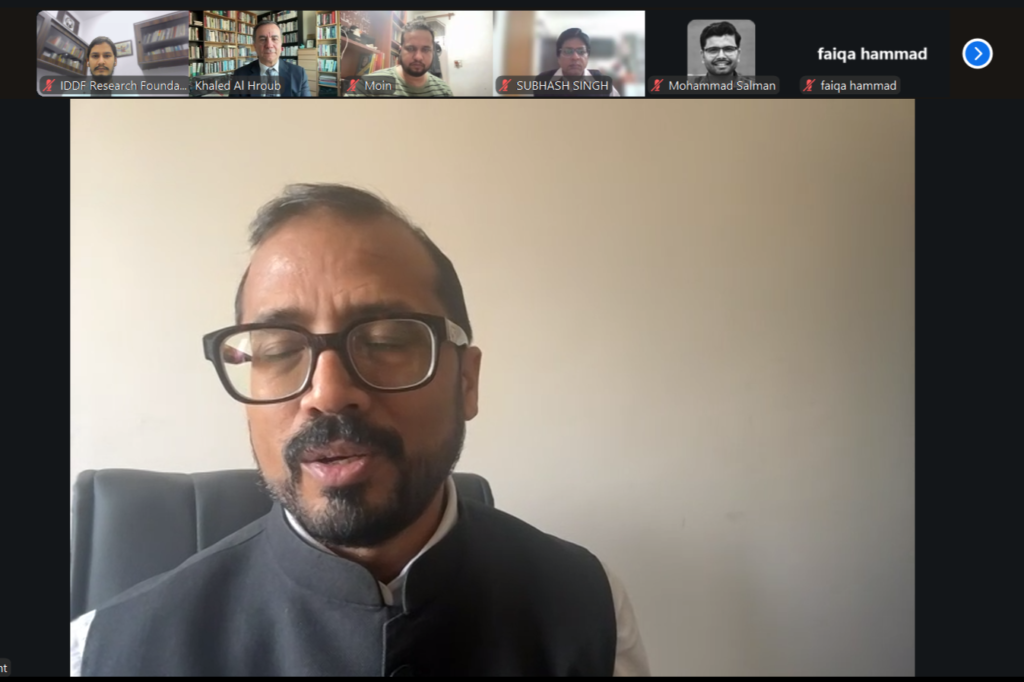
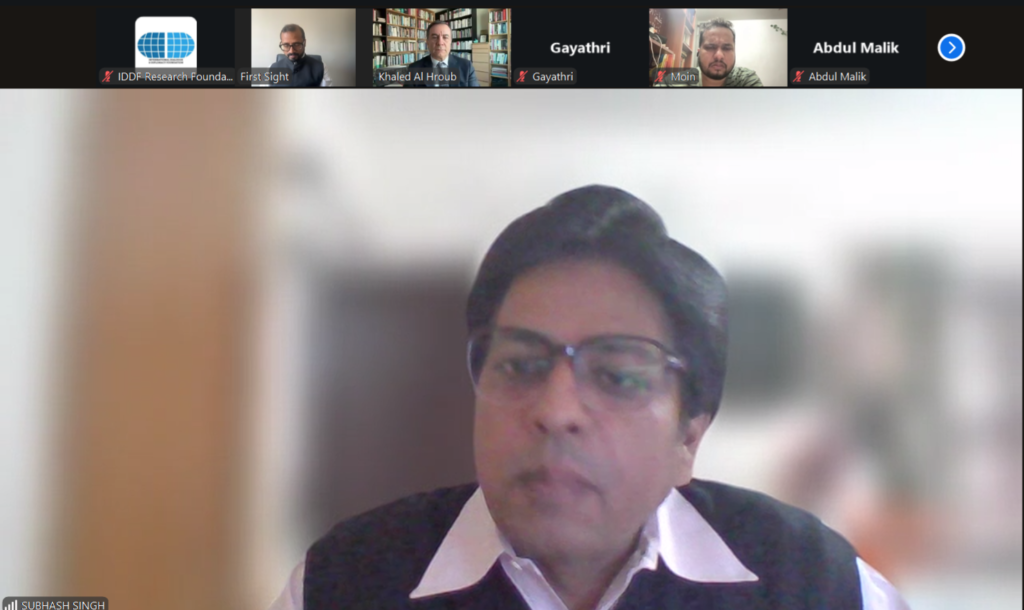
As Chair, Dr. Omair Anas located the discussion within wider global diplomatic trends and emphasised the need for rigorous scholarly engagement with Middle Eastern affairs. Dr. Subhash Singh, as Discussant, raised critical questions on political fragmentation, the relevance of international institutions, and the future of resistance movements, thereby expanding the analytical scope of the session.
The event drew participation from students, researchers, and professionals who contributed thoughtful questions, reflecting strong academic engagement. The deliberations underscored the need for continued research on the Palestinian issue, the revitalisation of Global South solidarity, honest conversations beyond securitised narratives, and reaffirmation of Palestinian humanitarian and political rights.
The programme concluded with a reiteration of IDDF’s commitment to fostering informed dialogue, promoting scholarly inquiry, and supporting peace-oriented perspectives on global conflicts.