Fueling the Future: The India-Guyana Partnership Imperative

By Arman Sidhu
India’s March 2026 LPG crisis has laid bare the structural fragility of the country’s energy supply architecture. The effective closure of the Strait of Hormuz following US-Israeli military operations against Iran reduced ship transits by an estimated 97 percent, triggering an immediate 30 percent drop in weekly LPG inflows. Domestic cooking gas prices surged past ₹900, with black-market rates exceeding ₹2,300.
For a country with 332 million active connections and 88 percent oil import dependency, this is the most severe energy supply shock in a generation. Escalating Western sanctions on Russian crude have concurrently pushed Russia’s share of Indian imports below 25 percent. The dual squeeze on India’s two largest supply corridors has made the case for geographic diversification undeniable.
Guyana, producing 900,000 barrels per day from the Western Hemisphere’s most prolific new oil basin, offers precisely the kind of non-Hormuz, non-sanctioned supply alternative that the crisis demands.
Guyana’s Oil Trajectory and India’s Energy Calculus
The Stabroek Block offshore Guyana, operated by American supermajor ExxonMobil with US-based Chevron/Hess and China National Offshore Oil Corporation (CNOOC) as consortium partners, has yielded 51 commercial discoveries and an estimated 11 billion barrels of recoverable oil-equivalent. Daily production reached 900,000 barrels by November 2025, with projections targeting 1.7 million barrels per day by 2030.
India has already moved to establish an energy relationship. The Indian Cabinet approved a hydrocarbon MOU with Guyana during Prime Minister Modi’s November 2024 state visit. Indian Oil Corporation (IOC) and Hindustan Petroleum Corporation Limited (HPCL) purchased roughly six million barrels of Guyanese crude in 2025, and Guyana has formally invited Indian companies to participate in its 2026 oil block auction. The supply route from Guyana bypasses the Strait of Hormuz entirely, a geographic advantage whose value the current crisis has rendered self-evident.
The Indo-Guyanese Bridge and Diplomatic Momentum
The bilateral relationship rests on a cultural foundation that most of India’s new energy partnerships lack. Indo-Guyanese citizens constitute approximately 39 to 43 percent of Guyana’s population, the country’s largest ethnic group, descended from nearly 239,000 indentured laborers brought from India between 1838 and 1917. President Irfaan Ali earned a Master’s degree from Guru Gobind Singh Indraprastha University in New Delhi on an Indian Technical and Economic Cooperation (ITEC) scholarship, and served as president of Guyana’s ITEC Alumni Association. The People’s Progressive Party (PPP) government’s management of oil revenues has drawn consistent praise from the IMF, which described Guyana’s Natural Resource Fund as a model of prudent, rules-based governance.
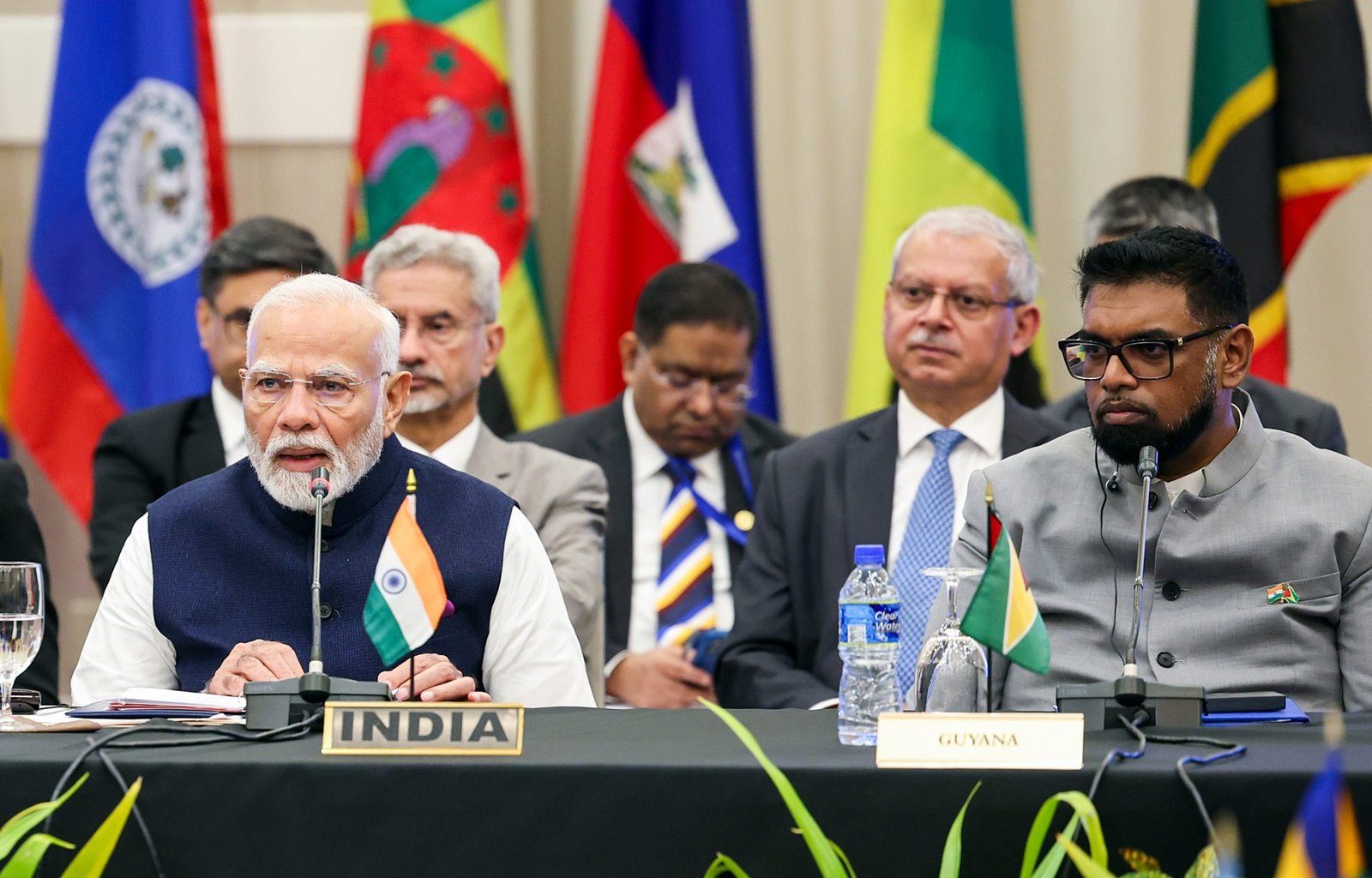
Modi’s November 2024 Georgetown visit, the first by an Indian leader in 56 years, produced 10 memoranda of understanding spanning hydrocarbons, agriculture, health, digital payments, and education. The visit also coincided with the Second India-CARICOM Summit, positioning Guyana as India’s primary gateway to the 15-member Caribbean Community.
Defence, Essequibo, and the Post-Maduro Transition
The January 3, 2026 US capture of Venezuelan President Nicolás Maduro in Operation Absolute Resolve has materially altered Guyana’s security environment. Maduro had been the principal escalator of Venezuela’s Essequibo claim, signing legislation in April 2024 that declared the territory a Venezuelan state and announcing elections for its governor in May 2025. The US intervention degraded Venezuelan military infrastructure, removed the regime’s central figure, and put the territorial claim on ice according to regional analysts. The immediate threat of Venezuelan military adventurism has receded.
The threat has receded, but it has not been extinguished. Acting President Delcy Rodríguez wore an Essequibo pin at her inauguration, and Venezuelan Foreign Minister Yvan Gil reaffirmed the claim in February 2026. The Essequibo dispute is institutional, not personal; it is embedded in Venezuelan national identity and sustained across political factions.
Guyana’s long-term defence requirements persist regardless of who emerges to lead Venezuela moving forward. The Guyana Defence Force (GDF) fields roughly 3,400 to 4,200 personnel, with no combat aircraft and no main battle tanks. Narcotics trafficking, illegal mining, and the challenge of securing nearly 200,000 square kilometers of dense jungle compound the security deficit.
India’s credentials as a defence capacity-builder are well established. The Nigerian Defence Academy in Kaduna was established in February 1964 with Indian Brigadier M.R. Verma as its first commandant. India’s ITEC programme has trained over 200,000 officials across 170 countries.
From the defence export angle, India delivered two Dornier-228 aircraft manufactured by Hindustan Aeronautics Limited (HAL) in April 2024, under a $23.37 million Line of Credit, the first Indian defence LoC to any Caribbean nation. GDF Chief of Defence Staff Brigadier Omar Khan visited India in November 2024, meeting India’s Chief of Defence Staff and all three service chiefs.
India’s defence export sector has grown from ₹686 crore in FY 2013–14 to approximately ₹23,622 crore ($2.76 billion) in FY 2024–25, a 34-fold increase aligned with the Atmanirbhar Bharat defence indigenization campaign.
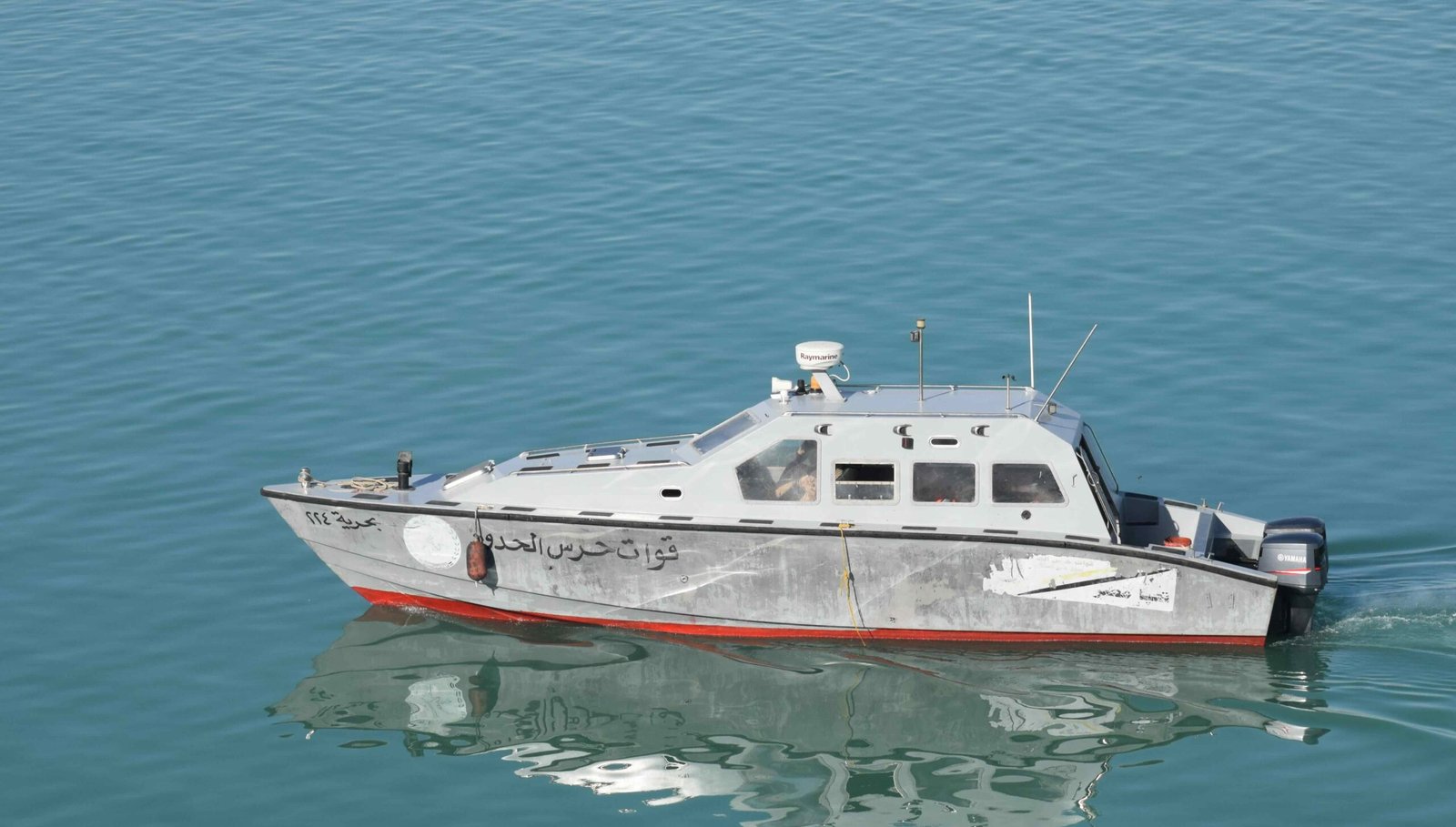
Indian defence products suited to Guyana’s extant needs include Bharat Electronics Limited (BEL) coastal surveillance radar systems (deployed in Mauritius, Seychelles, and the Maldives), Goa Shipyard Limited offshore patrol vessels (priced 30 to 40 percent below European equivalents), and HAL Dhruv light helicopters. The post-Maduro security window does not eliminate Guyana’s need for these capabilities; it improves the conditions under which procurement partnerships can be negotiated.
Outward Investment and the South American Footprint
India’s engagement with Guyana fits within a broader pattern of expanding outward investment in South America. Khanij Bidesh India Limited (KABIL), a Government of India joint venture, signed an agreement in 2024 for lithium exploration across five blocks in Argentina’s Catamarca province, India’s first overseas lithium project.
In Guyana, the Indian footprint includes Bank of Baroda, Garden Reach Shipbuilders and Engineers (GRSE) built vessels, Indira Gandhi National Open University (IGNOU) distance education, and over $150 million in concessional Lines of Credit. The November 2024 MOU on Unified Payments Interface (UPI) deployment signals intent to expand India’s digital architecture into the Caribbean.
Obstacles and the Path Forward
The relationship faces structural obstacles. China holds a 25 percent Stabroek stake through CNOOC and dominates Guyanese construction. The United States, its strategic posture in the Caribbean dramatically reinforced by Operation Absolute Resolve, remains Guyana’s dominant security guarantor. Secretary of State Marco Rubio’s March 2025 visit to Georgetown included direct warnings to Venezuela. Any Indian defence relationship must complement, not compete with, this US umbrella.
A diplomatic friction also warrants attention. In a May 2025 International Court of Justice (ICJ) vote on provisional measures regarding Essequibo, India’s Judge Bhandari voted against the order, generating criticism in Guyanese media. India’s High Commissioner subsequently reaffirmed support for Guyana’s territorial integrity. The episode underscores the need for consistent diplomatic signaling.
Bilateral trade remains modest at roughly $106 million in 2023–24, and there are no direct flights between the two countries. India covers four Caribbean nations from a single High Commission in Georgetown. Nevertheless, with political will these are solvable constraints. The post-Maduro landscape has reduced the most acute security risk to Guyana’s oil sector, improving the investment climate for Indian engagement precisely when India’s supply diversification needs are most urgent.
The convergence of Indian energy insecurity, Guyanese defence needs, a deep Indo-Guyanese population base, and India’s maturing defence export sector creates a bilateral alignment that is structurally sound and strategically consequential. The question is whether New Delhi will invest the diplomatic bandwidth to convert opportunity into sustained partnership.
Arman Sidhu is an American geopolitical analyst and writer. He regularly covers the commodities market, international trade and foreign investment. He is a regular contributor to Geopolitical Monitor and his work has previously appeared in The Diplomat, Eurasia Review, Economic & Political Weekly, and RealClearWorld, among several other outlets. The views expressed in this article are the author’s own.