THE UAE DIGITAL DIRHAM: Towards Accelerating the BRICS Pay

By – Bhadra Ashok Kumar
The Brazil, Russia, India, China and South Africa group or the BRICS Group is a coalition of countries formed to promote multipolarity across the globe along with social, economic, and political cooperation. Through the means of BRICS grouping, a strategic system was built to re – organize the global governance structure and voice their concerns. The BRICS coalition has led to a large-scale expansion of developmental programs, including innovative infrastructure and financial models such as the New Development Bank (NDB), the BRICS Pay, BRICS Contingent Reserve Arrangement (CRA) and others. With the addition of countries like Egypt, Ethiopia, Indonesia, Iran, and the United Arab Emirates, the coalition has broadened its presence, resulting in the formation of BRICS+. The BRICS+ economies are contributing to approximately 27% of the world’s gross domestic product (GDP), which adds up to an estimated amount of ~$31 trillion, making it a significant economic bloc.
The Digital Dirham Architecture
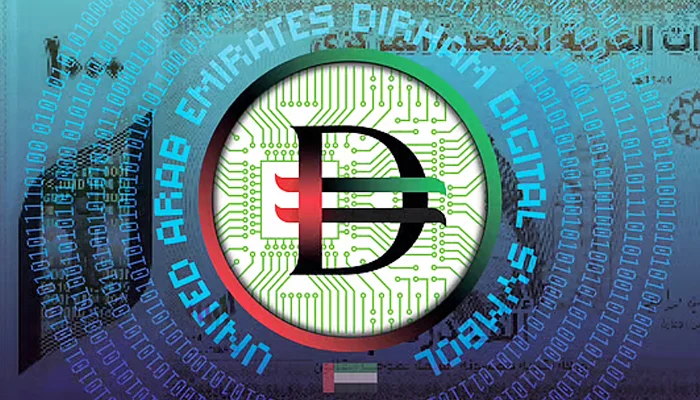
With the rapid expansion of the BRICS bloc and the integration of some large economies, the technological and financial landscape have changed remarkably. The pioneering innovations of the United Arab Emirates and the recent development of the Digital Dirham – A Central Bank Digital Currency (CBDC) by the Central Bank of the United Arab Emirates (CBUAE) can play a crucial role in the trading patterns of the BRICS+ economies. The development of the ‘Digital Dirham’, a part of their Financial Infrastructure Transformation Programme (FIT), aims to remodel the financial sector of the UAE through digital innovation. The FIT programme by the UAE government focuses on digital inclusion, ease of cross – border proceedings, transparency and security in transactions and subsequently achieve a leadership position in digital innovations.
Digital Dirham, built on Distributed Ledger Technology (DLT), is a blockchain based digital technology that records and shares the transactions while ensuring transparency and effective domestic and cross-border payment facilities. These facilities assist the financial organisations to manage the currency sovereignty while ensuring its smooth operations. CBUAE is currently focusing on introducing the retail and wholesale version of the Digital Dirham in the market. The retail application of the Digital Dirham would assist the general public (individuals and business), where they can use it for online and in-store payments, business to business (B2B) and business to consumers (B2C) transactions. While the wholesale application of the Digital Dirham would prioritize international trade and other cross-border payments. In this two – tier model, the central bank has the complete authority to issue the currencies, which are further distributed to the public through licensed financial institutions (LFI). Hence, the strategic and innovative implementation of CBDC would widen the opportunities for the UAE government in the digital payment domain.
Catalyst for BRICS unified digital currency ambitions
CBDCs has been gaining momentum recently, and with the advancements in the financial sector by CBUAE, and its contribution to Project mBridge, has widened the international transactions corridor further for the BRICS economies. The mBridge project is a collaborative output by the Bank for International Settlements – the BIS Innovative Hub, the Bank of Thailand, the Central bank of United Arab Emirates, the Digital Currency Institute of the People’s Bank of China, the Hong Kong Monetary Authority and the Saudi Central Bank. The mBridge minimum viable product (mBridge MVP) showcases the strategic powerplay of UAE in expanding their presence across the region and its ability to compete and collaborate with major economies across the globe. UAE’s innovations in the digital currency domain significantly aligns with the goals of the BRICS+ economies currently.
The BRICS pay is an emerging payment initiative by the BRICS states to facilitate cross-border transactions and develop financial sovereignty. The project aims to overcome the increased dependency on US dollars (de-dollarisation) and the traditional SWIFT system. The Digital Dirham of CBUAE largely aligns with the BRICS pay initiative, with secure payment options and usage of modern blockchain technology. Digital Dirham, through the mBridge project focuses on overcoming the interoperability challenges while avoiding intermediaries during transactions of different currencies. Through this project, the UAE is strategically boosting the tourism sector, where tourists are awarded with a non – resident wallet that ensures ease of transactions and instant VAT refunds. The Central Bank of UAE is currently assessing the trade agreements and the associated risks to ensure ease in cross border payments while maintaining transparency. This financial inclusion blueprint assists the BRICS+ states to develop an ecosystem that would help them upgrade their individual economies through a unified payment system.
With its strong ties across the Middle East and South Asian region, the UAE acts as a bridge to smoothly transport the goods and services with some leading economies in the world. The Abu Dhabi Global Market (ADGM) and the Dubai International Financial Centre (DIFC) provides an experimental zone for the CBUAE to collaborate with other financial institutions and test the usage of Digital Dirham under real world conditions. These innovative hubs would provide the public sector and the private sector a space to explore the market and implement focused Anti – Money Laundering (AML) and Know Your Customer (KYC) protocols. The setup of a platform for the financial regulators across the globe to analyse and manage the risk associated with digital payment systems is a strategic advancement on fintechs by the UAE government.
Similarly, the overnight and intraday lending facilities developed as a part of the Digital Dirham guarantees liquidity support for the financial institutes. This ensures that the LFIs maintain a sufficient amount of Digital Dirhams in case of emergencies or according to requirements. On a larger context, one of the pressing challenges of the Digital Dirham is the monetary policy that is associated with the saving and borrowing decisions, as the non-cash central bank currency usage and digital infrastructure expands. So as to overcome the bottleneck, the CBUAE is in the process of implementing policies that would ensure the interchangeability of Digital Dirham in cash or bank deposit format in par with the reserves and spread awareness on digital literacy. Hence, the monetary stability protocols and strategic management policies of Digital Dirham acts as a viable example for the BRICS pay project to reduce the associated risks during its implementation.
Pathway to BRICS Pay
The UAE Central Bank through its Digital Dirham initiative has provided the globe a well designed blueprint on innovative digital fintechs which would act as a catalyst for BRICS to develop a unified payment system. The CBUAE’s phased pilot projects has significantly helped the government to understand the opportunities and challenges associated with the project and provide substantiate solutions. The structured CBDC framework ensures adequate financial inclusion and collaboration from commercial banks and other private institutions, resulting in a large pool of resources and partnerships. The Digital Dirham is a step towards achieving a vision, where the project offers deep insights on innovative digital fintechs. This project would have a significant domino effect on various domains, such as accelerating de – dollarisation, upscaling the fintechs of the individual BRICS nations, and cost effective remittance process. Therefore, CBUAE’s monetary and regulatory policies have created a pathway for the BRICS+ nations to build an unified and digitalised financial ecosystem.
All views expressed in this publication are solely those of the authors, and do not represent the IDDF Research Foundation, in its entirety or its officials and personnel.