Why the US Naval Blockade on Iran Failed?

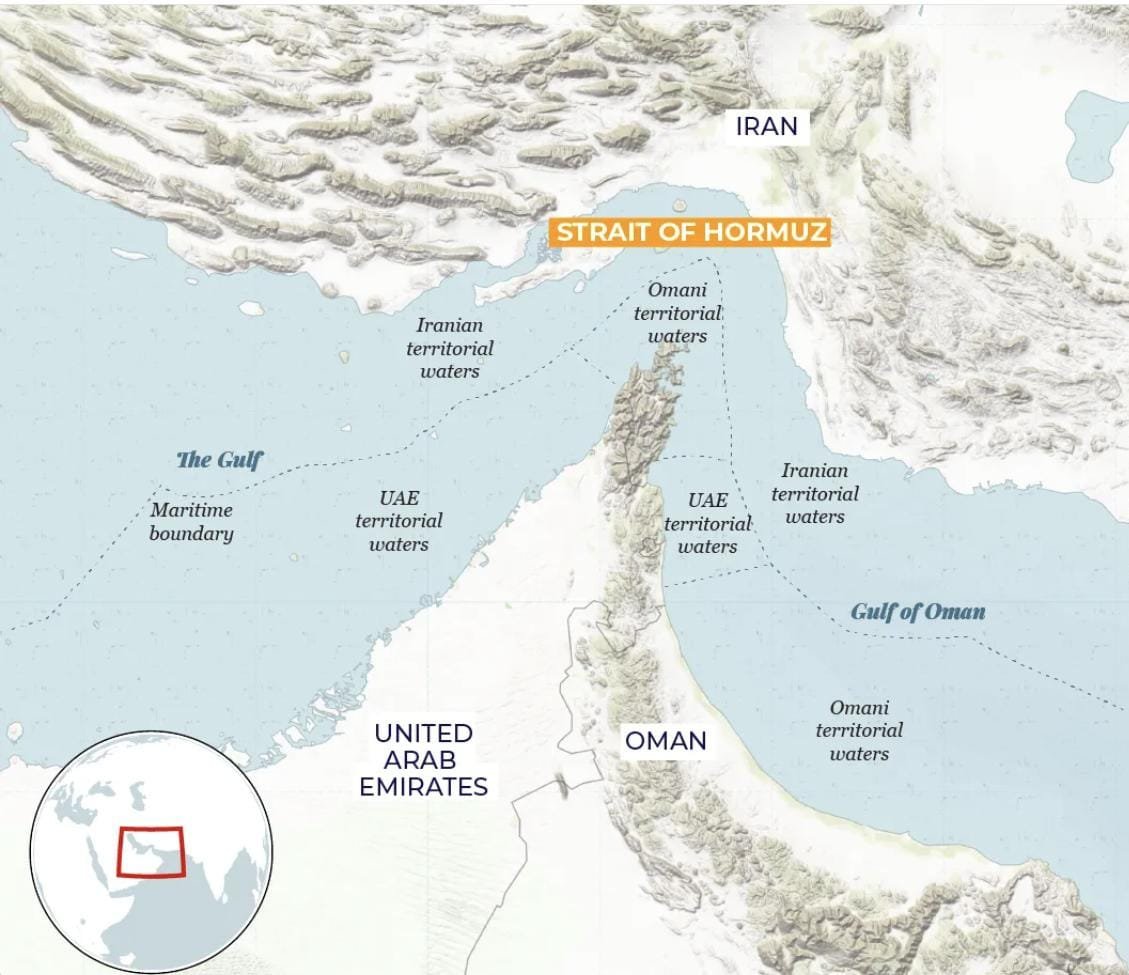
The 2026 US-Israeli war on Iran and the resounding victory of Iran proved the shift in not only the balance of power but also the denial of a regional order imposed by the US and Israel. As an outcome of the 40-day war, the key to the Strait of Hormuz currently lies in the hands of the Islamic Republic of Iran. Despite the ceasefire on April 8, 2026, five days later, the US imposed an illegal naval blockade on Iranian ports with the objective of inflicting damage on Iran’s wartime economy. In this context, one question stood out: whether the US could achieve its goals through a maritime blockade, something that had failed to do so through aerial aggression?
Geographic Leverage
Iran has the geographic advantage of not only 3,700 miles of land borders with seven states, but also 435 miles of coastline along the Caspian Sea. This geographical blessing enables the safe passage of oil and gas through alternative trade routes when the US blockade of the Strait of Hormuz is in place. Iran has historically had creative and innovative ways to deal with US sanctions on its trade. Regardless of America’s best efforts at imposing a full naval blockade, between April 13 and April 15, around 25 ships reportedly transited the strait. The Iranian vessels evaded the US blockade by operating beyond the traditional rules of maritime trade using fake flags, shell companies, and disabled signals. Small-sized “shadow fleets” directly or indirectly linked to Iran continue to pass through the Strait, lacking official IMO numbers and an unnamed destination. According to media reports on April 27, 2026, Iran loaded approximately 4.6 million barrels of crude, valued at around $400 million, at its export terminals, with a further four million barrels seemingly moving past the blockade line.
The US-Israeli objective of halting Iranian exports was an overly ambitious goal due to Iran’s geographical leverage of access to alternative routes. Despite the US-Israeli strategy in isolating Iran economically, it has been conducting its oil export through alternative railway, sea, land, and road networks. One of the prominent alternative routes is the Iran-Turkmenistan-Kazakhstan railway linking Iran to China, which helps Iranian oil reach global markets. While Tehran faced logistical issues with its vessels at Bandar Anzali port in the Caspian Sea, these waters are currently used as an alternative trade route for Iran to exchange goods with Russia. Before the blockade, around 130 million barrels of Iranian oil were exported. Iran outmanoeuvred the US blockade by using northern seaports, transporting cargo overland, and later shipping it by rail to China. Additionally, the new transit corridor opened between Pakistan and Iran, along with a pipeline running through Iraq, allows the smooth passage of imports and exports. Iran’s presence in the global energy market will continue unabated despite the US-Israeli strategy to strangle its economy.
Railway Network as an Alternative Route
If exports are paused, Iran’s oil fields may sustain permanent damage; therefore, fast-tracking trade with China via the rail route was crucial for Iran in that context. China is the world’s largest oil importer, and around 90 per cent of Iran’s oil export goes to China. According to Iranian news agencies, China is an equally intended target of the US naval blockade, as it takes approximately 13 to 15 percent of its crude oil imports from Iran, and the trade volume before the war exceeded 1.38 million barrels per day. In the pre-2026 US-Israeli war on Iran, only one cargo trains a week departed from Tehran for Xi’an in China. However, the current situation suggests that at least one cargo train travels between them every three days. Through this alternative land route, Iran reportedly accounts for up to 40% of its regular maritime trade. By using the rail route, Iran is proactively trying to minimize supply shortages. According to Professor Steve Hanke from Johns Hopkins University, “Railways can transport strategically significant quantities, but in the short term they cannot replace giant oil tankers.” A cargo train from Tehran could carry only 50 standard 40-foot containers. In contrast, a long-haul container has the capacity to carry thousands of them. While the rail route trade with China may not fully offset the US blockade, it would definitely be a vital part of Iran’s resistance strategy to blunt it.
Alternative Land Routes
The US maritime blockade created a logjam at Karachi port and Port Qasim, which also comprised 3000 Iran-bound containers. The new transit corridor inaugurated between Pakistan and Iran enables the transport of goods from Iran to various countries, including Uzbekistan, and vice versa. The new transit route connects Gwadar, Karachi, and Port Qasim with border crossings such as Gabd and Taftan in Iran, providing Iran with access to railway and highway infrastructure linked to the China-Pakistan Economic Corridor (CPEC). Additionally, Iran imports food, consumer goods, and industrial materials from Pakistan, Türkiye, and Russia to mitigate the maritime disruptions caused by the US blockade. The combination of alternative sea and land routes helps bypass the US-imposed maritime blockade intended to stifle Iran’s economy.
Why the US Blockade on Iran Destined to Fail?
Coming back to the question raised at the beginning of this piece: whether the US could achieve its claimed goals through maritime blockade? The US naval blockade has indeed limited Iran’s oil exports. However, it is far from capable of fully halting Tehran’s oil exports, as the state has survived decades of economic sanctions. Tehran’s diplomatic outreach, exemplified by the Foreign Minister’s multiple visits to Pakistan and Russia, demonstrates proactive efforts to ensure the smooth exchange of goods via overland routes. It is undeniable that Iran faced a diverse range of challenges. Certainly, the US blockade increased shipping costs for Iran’s oil exports. Furthermore, Iranian efforts to diversify export routes via the Goureh-Jask pipeline have been constrained by limited infrastructure development and technological challenges, thereby limiting its effectiveness. The analysis of the current situation suggests that Washington’s strategy of maritime piracy did not yield the desired outcomes. In other words, it failed to cause Iran’s economic implosion, contrary to what many in the US circle claimed. The US President Trump’s statement in late April that “the whole oil infrastructure is going to explode” in Iran is disproved by Iranian trade with China via Central Asia, Russia through the Caspian Sea, and effective utilization of land borders with Türkiye and Pakistan.
Evading the US naval blockade using “ghost vessels” would be successful in the short term. Nevertheless, the long-term sustainability of Iran’s oil exports warrants expanded alternative trade routes and the safe passage of its oil through land routes. While trade volume is limited, alternative trade routes utilised by Iran could help minimise the impact of the blockade on its economy amid rising costs, currency depreciation, and high inflation. In short, it appears that Iran has managed the US blockade of the Strait of Hormuz and the Sea of Oman by transiting exports through alternative land, railroad, and sea routes. Therefore, it is not inaccurate to say that any US strategy to confront Iran through a maritime blockade of the Strait of Hormuz is doomed to fail.